
Belgium · cards, wallets, data
Paying and staying connected in Belgium
Two things decide how smooth a trip feels once you are on the ground: whether your card or phone works at the counter, and whether your phone has data when you need it.
What you will meet, act by act
The four situations visitors hit first, and how each one usually resolves.
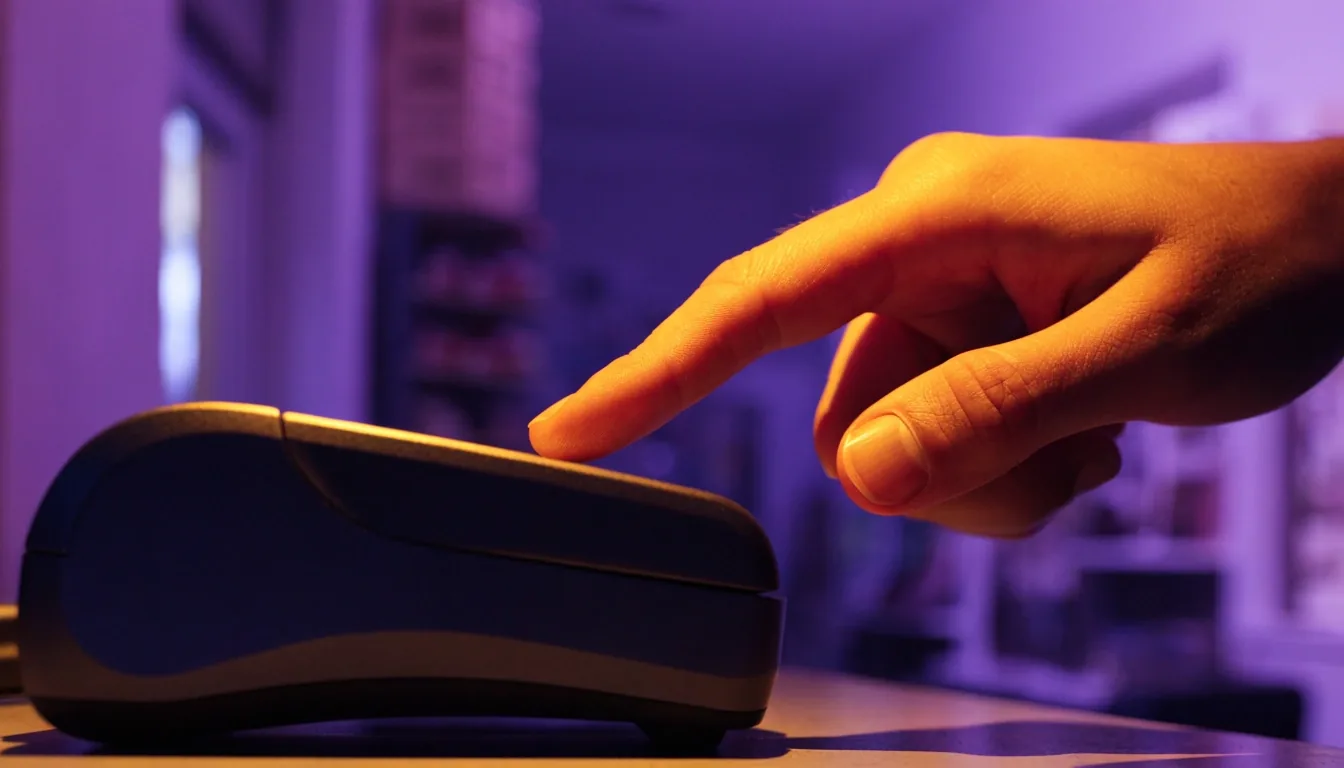
Tapping a card at the supermarket till
Contactless card or phone, either works
Buying from a market stall
Often cash — keep a little on hand
Landing and needing data straight away
eSIM activated, or roaming confirmed
Checking a train time mid-journey
Needs a live connection, not just a card
Contactless is the default, not the exception
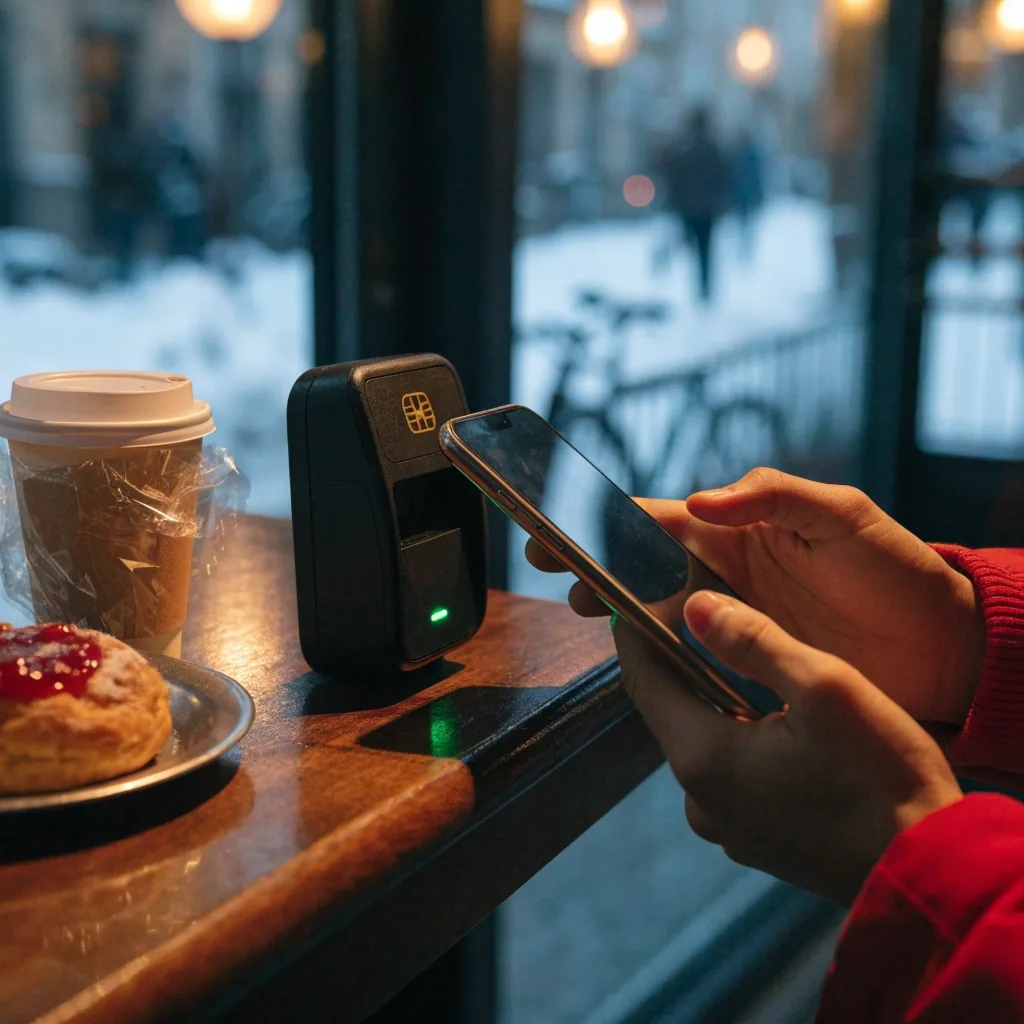
Contactless cards and mobile wallets work widely across Belgium. Supermarket checkouts, ticket machines, and most cafes accept a tap, and a wallet on your phone behaves much like the physical card in your pocket. For everyday spending you can usually leave cash at home.
Widely is not the same as everywhere. A small number of establishments prefer cash, and some older terminals only take certain card types. Carrying a modest amount of cash as a backup covers those gaps without changing how you normally pay.
If you are arriving for a short stay, the practical sequence is simple: set up contactless payment before you fly, keep one backup card separate from your wallet, and treat the phone as a convenience rather than the only option.
Before you tap
- Check your bank's foreign transaction fee before you rely on one card for the whole trip.
- Add the card to your phone wallet and test it once at home, not at a Belgian till.
- Keep a second card in a different bag so a lost wallet is not a lost day.
Where cash still earns its place
Smaller establishments, some markets, and a few independent businesses still lean toward cash. It is less about policy and more about the cost and habit of card handling for a small operation.
Having a little cash on hand avoids the awkward moment when a tap does not go through.
- A coffee at a small cafe A few euros in coins covers it
- A market stall on a Saturday Often cash-only, no card reader in sight
- A taxi you flag rather than book Ask before the ride whether a card works
- A tip or a small thank-you Coins make the gesture easy
You do not need much. Enough for a coffee, a market stall, or a taxi is usually plenty. The point is to have an option, not to switch back to cash-first habits.
Mobile wallets in daily use
A mobile wallet works in the same places as a contactless card, which makes it a practical default for visitors who would rather not carry a physical card. It is accepted at most terminals and behaves predictably once it is set up.
The main thing to check is that your wallet is configured before you travel, not after you arrive. If you are relying on a phone for payment, keep a physical backup — a dead battery or a wallet that needs re-authentication at the wrong moment is only a solvable problem if you have a second option.
eSIM options for short stays
An eSIM lets you add a data plan without swapping a physical SIM, which suits short trips and multi-country itineraries. For a Belgium city break it is often the simplest way to get connected on arrival: you install it before you travel and activate it when you land.
The advantage is that you keep your home number active for calls and messages while the eSIM handles data. That separation is useful if you need your usual number for banking or two-factor codes. Check that your phone supports eSIM before you plan around it — that single check saves the most frustration.
Install at home, activate on landing. If your phone does not support eSIM, a roaming pass or a local SIM at the airport are the alternatives worth comparing.
Roaming rules and what they mean
Roaming within the EU follows rules that cap costs and generally let you use your home plan's allowances in other member states. For a visitor from outside the EU, the picture depends on your home operator's agreement with Belgian networks.
The practical takeaway is to know whether your plan covers Belgium and at what cost. If it does not, an eSIM or a local plan is usually the cheaper route. Guessing at roaming costs is how people end up with an unpleasant bill they did not plan for.
Read your plan's roaming terms before you travel. That is the reliable move, and it takes a few minutes at home rather than a phone call from a station platform.
Getting connected at the airport
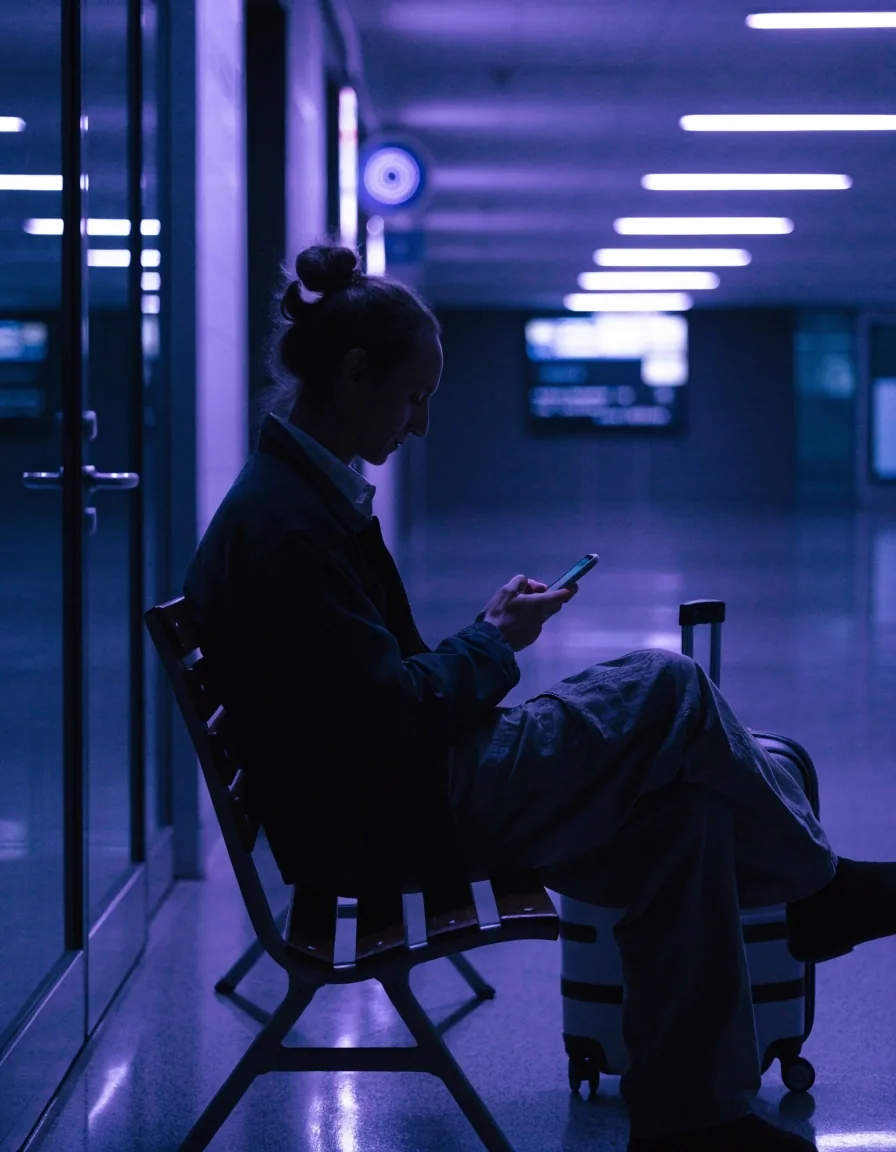
Brussels Airport is a common entry point, and getting data working early makes the onward trip easier. If you have set up an eSIM, activation on landing is usually straightforward. If you are relying on roaming, confirm it is active before you leave the terminal rather than at the first platform you reach.
From there, rail and road links connect the airport to central Brussels and other cities, and a working connection helps you check times and platforms as you go. Connectivity is not a side issue on arrival day; it is part of the logistics, in the same way a working card is.
If something is not working, the fix is usually quicker in the terminal than on a platform: a staffed desk, a shop, and a stable signal all sit inside the building.
Payment and data as trip infrastructure
It helps to treat payments and connectivity as infrastructure rather than conveniences. A working card and a working data connection are what let you book a ticket, check a platform, or find a bus stop without stress. When either fails, the whole trip slows down.
Planning for both in advance is a small effort with a large payoff. Set up your payment method and your data option before you travel, and carry a backup for each. That is the whole strategy, and it covers most of what can go wrong.
What to prepare before you travel
- Payment
- Contactless card in your wallet, plus a backup card kept apart
- Mobile wallet
- Configured and tested once at home, not on arrival
- Data plan
- eSIM installed before departure, or roaming terms read in advance
- Cash
- A small amount for markets, small cafes, and the occasional taxi
- Power
- A charged power bank, since the phone is now the payment method
Questions visitors ask before they fly
Short answers to the payment and connectivity points that come up most often when planning a Belgium trip.
Can I get through a whole trip in Belgium without cash?
Mostly, yes. Contactless cards and mobile wallets cover supermarkets, ticket machines, and most cafes. The exceptions are small and predictable: some market stalls, a few independent businesses, and the odd taxi. A modest amount of cash turns those moments from a problem into a non-event.
Is an eSIM better than roaming for a short stay?
It depends on your home plan. If your operator already includes Belgium in your allowance, roaming may cost nothing extra and needs no setup. If it does not, an eSIM installed before departure is usually the simpler and cheaper route, and it keeps your home number free for calls and codes.
Do mobile wallets work everywhere contactless cards do?
In practice, yes at the same terminals. The difference is on your side: a wallet needs a charged phone and may ask for re-authentication. That is why a physical card as backup is worth carrying even when the phone is your main method.
What should I check before I rely on one card for the trip?
Two things: whether your bank charges a foreign transaction fee, and whether your card type is accepted by older terminals. Both are quick to check at home and awkward to discover at a counter. A second card kept in a different bag covers the rest.
Does this apply to small businesses travelling to Belgium too?
The payment side is similar, but business travel adds invoicing and expense questions on top. Our guide to small business in Belgium covers the e-invoicing and admin side, while this page stays with what you need to pay and stay connected while you are there.
Questions we can answer directly
If your situation is more specific than a guide can cover, get in touch. We work from Lochristi, Monday to Friday, 9:00 AM to 6:00 PM, and answer questions about travel logistics and small business admin in Belgium.
- Address
- Raveschoot 22, 9080 Lochristi, Belgium
- Phone
- 995008194
- [email protected]
- Hours
- Monday to Friday, 9:00 AM – 6:00 PM
Nordic Vantage Solutions, Raveschoot 22, 9080 Lochristi. Visits by arrangement during working hours.
Set up both before you fly, and carry a backup for each
That is the whole strategy for payments and connectivity in Belgium, and it covers most of what can go wrong. From here, the next useful step is usually the transport picture: how you get from the airport to a city, and how you move around once you are there.