
Brussels and Bruges
City guides for Brussels and Bruges
Practical orientation for both cities: how to reach them, where the historic centres begin, and when a day trip beats an overnight.
Two cities, two different trips
Brussels and Bruges reward different kinds of trips. Brussels is a working capital with museums, the Grand Place, and an international business quarter, and it functions well as a base for day trips. Bruges is a historic Flemish city built around canals and medieval architecture, better suited to slower pacing.
This page keeps to what helps you decide and navigate: how to reach each city, where the historic centres begin, and how day-trip logic works. It is not an exhaustive list, and nothing here is tied to a booking service.
What this page covers
- BaseWhy Brussels works as a single base for several cities
- CentreWhere the Grand Place and the historic centre begin
- TransitHow STIB-MIVB lines shape a Brussels day
- BrugesA compact centre that fills quickly, and what that means
- PacingDay trip or overnight, and how to pick between them
Why it works
Brussels as a base
Brussels works well as a base because rail connections to Ghent, Bruges, and Antwerp are straightforward. You can stay in one place and reach several cities without repacking. For a short trip, that flexibility is worth more than a slightly cheaper hotel elsewhere.
It is also the capital of Belgium and the de facto centre of EU institutions, which means it has two characters: the heritage city and the business city. Knowing which one you are there for shapes where you stay and how you spend your time.
To Ghent
Short rail hop, easy half-day add-on
To Bruges
Direct line, the classic day trip from Brussels
To Antwerp
Straightforward rail link, business-side city
Within Brussels
One hotel, no repacking between cities
Rail is the practical backbone of a short Belgium itinerary. If you are deciding how to move between cities, the transport guide covers the network in more detail.

The Grand Place and the historic centre
Brussels, historic centre
The Grand Place is the central square in Brussels and a flagship heritage site, known for guildhalls, town hall architecture, and seasonal events. It is a core anchor for short-stay sightseeing and one of the most photographed urban spaces in Belgium. That popularity is real, and so is the crowd.
Beyond the photo stop
Visit at different times of day and look at the surrounding streets, not just the square itself. The guildhalls reward a slower look, and the light on the facades changes a great deal between morning and evening.
Seasonal character
Seasonal events change the square's character, so what you see depends on when you go. If the square itself is a set piece on your dates, check what is scheduled before you plan the day around it.
Everything around the square is walkable, which is why the historic centre is the part of Brussels most visitors see first. The streets running off the Grand Place carry the same guildhall architecture at a lower density of people, and they connect on foot to the shopping and museum districts without needing transit.
Moving around Brussels
STIB-MIVB operates the metro, tram, and bus services, and it is essential for moving around beyond walking. The network is central to urban trip planning in the capital, and it is used heavily by commuters and residents. Visitors who treat it as optional tend to walk more than they intended.
Identify the lines that link your stops
Start here
Skip learning the whole network
Two or three lines is enough
Pair transit with a museum pass
Easier when you plan several visits
Treat walking as the fallback
Fine in the centre, slow across the city
Keep one payment method ready
Contactless and tickets both work
Budget the travel legs, not the whole map
Cover more ground, less time in transit
Bruges and its historic centre
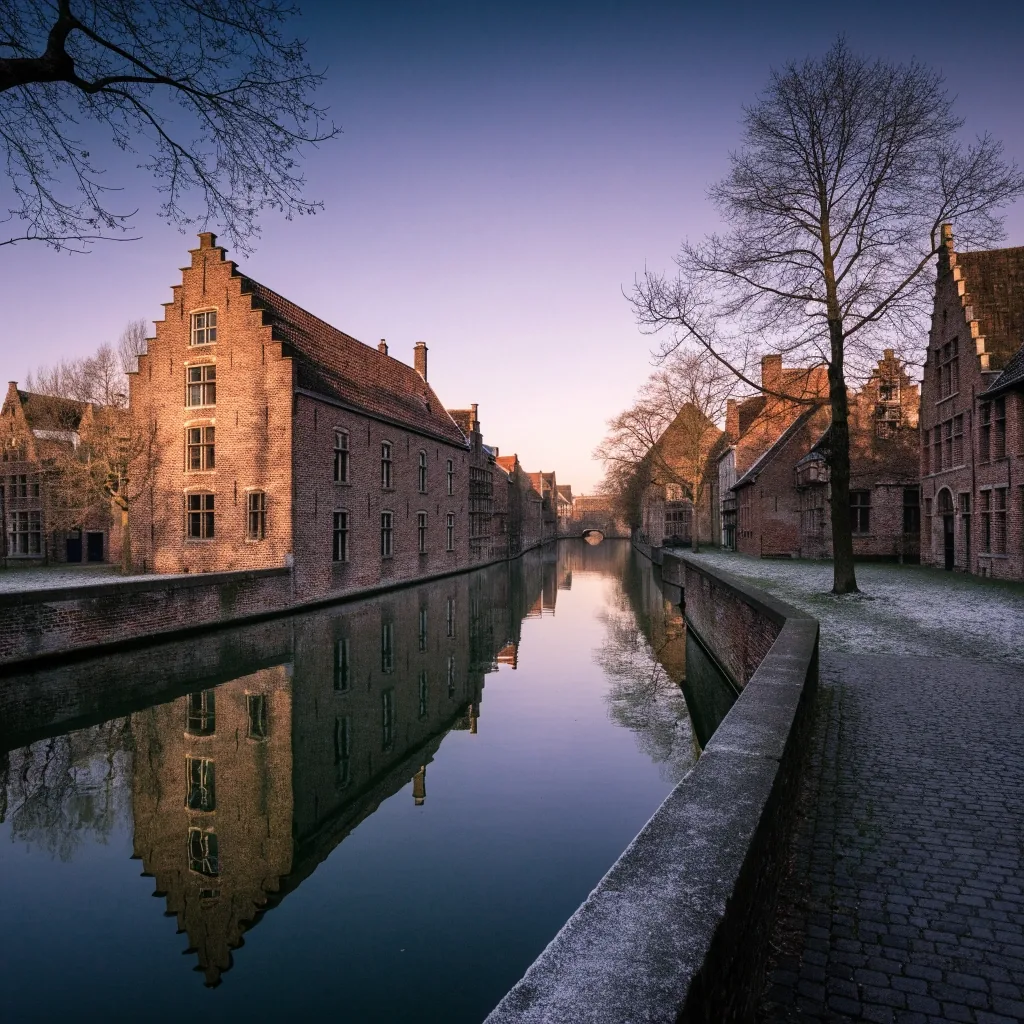
Bruges is a historic Flemish city known for canals and medieval architecture, and it is a standard inclusion in three- to five-day Belgium itineraries. Walking routes, boat tours, and heritage-focused visits are the main ways to see it. The historic centre is compact, which makes it easy to cover on foot.
That compactness is also why it fills quickly. Bruges is often visited as a day trip or an overnight from Brussels, and the difference between the two is significant. A day trip gets you the highlights; an overnight gets you the early mornings and evenings when the centre is quieter.
Getting there
Direct rail from Brussels, no car needed. The station sits on the edge of the centre, and the walk in takes you past the first canals.
Getting around
On foot, mostly. The centre is small enough that transit is rarely the deciding factor once you are inside it.
The centre, in practice
Walking routes, boat tours, and heritage-focused visits are the three ways most people see Bruges. Pick one for the day and let the rest be incidental; the centre is small enough that you will pass the rest on foot anyway.
Day-trip logic
The decision between a day trip and an overnight usually comes down to pacing. A day trip from Brussels to Bruges is easy by rail and covers the centre in a few hours. If you want the postcard scenery without the crowd, an overnight is the better call.
Day trip
Brussels out and back in a day
- Covers the centre in a few hours
- Good when Bruges is one stop on a longer route
- You see the highlights, at the busiest hours
- No change of hotel, no luggage in the way
Overnight
Bruges in the early and late hours
- Early mornings and evenings, when the centre is quieter
- Better when Bruges is the point of the trip
- Worth the unpacking if you want the postcard without the crowd
- Lets you add Ghent on the way back if you want
Ghent sits between the two in character and is similarly reachable. Pairing cities by rail lets you build a three- or four-day itinerary without a car. The logic is simple: pick a base, add day trips, and keep the travel legs short.
If your time is limited
If you only have a short visit, some Brussels attractions are worth a brief stop and others reward a longer stay. The Grand Place works as a short visit if you are passing through, while the museums justify more time. Deciding in advance prevents a rushed day that covers nothing well.
The same principle applies across cities. Fewer places, seen properly, usually beat a checklist. Belgium's density makes it tempting to over-schedule, and the network makes it possible to do so. The better trips leave room to actually be somewhere.
If your short visit is tied to work rather than sightseeing, the small-business guide covers the practical side: e-invoicing, local admin, and how to keep a short trip productive without adding a second city.
Choosing between Brussels and Bruges
Brussels suits travelers who want a base, a mix of heritage and business, and easy rail access to other cities. Bruges suits those who want a concentrated historic centre and slower pacing. Neither is the right choice for everyone; they serve different trips.
If you can, do both, with Brussels as the base and Bruges as a day trip or overnight. That combination covers the capital's range and Bruges's character without much logistical effort. It is the pattern most short itineraries settle into, and for good reason.
Choose Brussels if
You want one base, rail access to several cities, and heritage mixed with business.
Choose Bruges if
You want a compact historic centre, canals, and a slower pace across a few days.
If you have four days
Base in Brussels, take Bruges as a day trip, and add Ghent or Antwerp on another leg.
If you have two days
Pick one city and stay in it. Two half-days in two cities covers neither well.
Questions visitors ask
Short answers to the decisions that shape a Brussels and Bruges trip. For anything specific to your dates, the contact page is the quickest route.
Is Brussels or Bruges the better base?
Open
Brussels, for most trips. Rail connections to Ghent, Bruges, and Antwerp are straightforward, so you can stay in one place and reach several cities without repacking. Bruges suits a trip where the city itself is the point.
Can I do Bruges as a day trip from Brussels?
Open
Yes, and it is easy by rail. The centre is compact enough to cover on foot in a few hours, so a day trip gets you the highlights. The trade-off is that you see it at the busiest times of day.
Do I need a car for either city?
Open
No. Both cities work on foot plus rail, and pairing cities by rail lets you build a three- or four-day itinerary without a car. STIB-MIVB covers the Brussels network beyond walking, and the Bruges centre is small enough that transit rarely decides your day.
How long do I need for the Grand Place?
Open
It works as a short visit if you are passing through, and longer if you want the surrounding streets and the guildhall detail. Visiting at different times of day changes the experience more than adding hours does.
Plan the route before you book the room
If you are deciding how to reach Brussels or Bruges, or how to move once you are there, send us a message with your dates and we will point you at the right guide. Nordic Vantage Solutions is based in Lochristi and works in English.